The Short Answer
There is no standard answer to "how much does it cost to shoot a brand film in Japan," because today's production prices are first stratified by three things: production method (live action, AI production, or a mix of both), brand type (campaign-scale projects for large brands, specification-fixed products for small and mid-sized brands, mass-produced content for e-commerce), and service combination (a one-off project, or a project plus ongoing content marketing services). Using public data as a reference: live-action brand films in Tokyo carry budget references from ¥800,000 to ¥11,500,000 (a combined range drawn from several published pricing guides), and published no-live-action AI video services in Japan start at ¥250,000 for 30 seconds and ¥450,000 for 60 seconds (excluding tax). Artbe LLC (Shibuya, Tokyo; representative: Chunrong Chi) quotes with itemized line items, fixes the specifications before quoting, and prices one-off production separately from ongoing content marketing services. The sections below break this down, layer by layer.
Layer 1: Different Production Methods Mean Completely Different Cost Structures
1. Live action: price is determined by five factors
Public references for live action (all are budget guides published by service providers, not industry statistics):
By shooting day: video shoots in Tokyo run approximately ¥500,000 to ¥2,000,000 or more per day (Streetshow, Tokyo service page).
By project: brand films and advertising campaign content run approximately ¥800,000 to ¥3,000,000 or more (the detailed breakdown in Streetshow's Japan production cost guide; the guide's overall summary is ¥1,000,000 to ¥5,000,000 or more, covering many types of commercial production); a one-off 2–3 minute corporate video runs approximately ¥850,000 to ¥2,600,000 per piece, and high-end brand films for paid media run approximately ¥3,600,000 to ¥11,500,000 (Shootsta, Tokyo pricing guide). Japanese production companies also publish rate cards; FILMOQ, for example, lists brand films from ¥1,500,000 and CM / Web CM from ¥1,000,000.
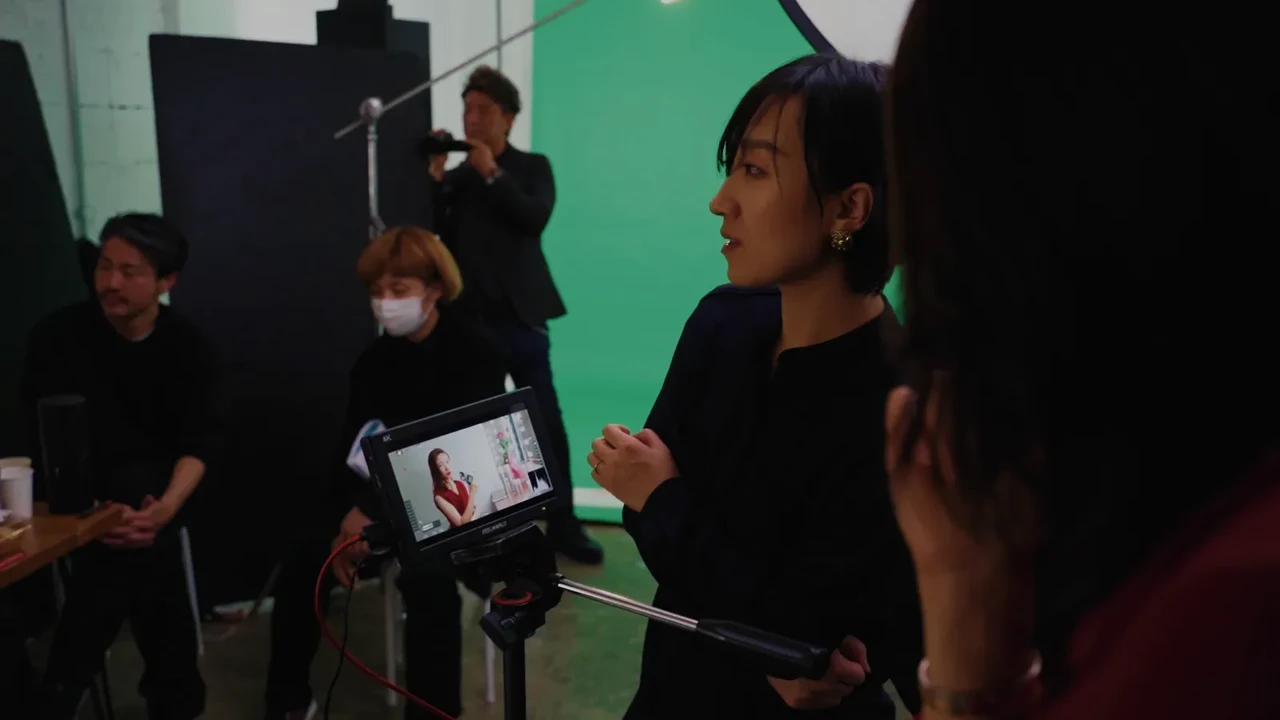
The price differences in live-action projects come mainly from five items: shooting scale (days, crew, equipment), depth of planning and creative, complexity of casting and locations (including the media, term, and territory scope of portrait rights), delivery specifications and quantities (duration, aspect ratios, number of versions, extension assets), and post-production requirements. How language versions are handled affects part of these costs, but since AI tools became widespread, translation and subtitling themselves are no longer a major cost driver — what actually creates the difference is the workload of localization judgment and re-execution.
2. AI production: what is cheap is "generating once," not "delivering a finished piece"
Public pricing for AI production has also appeared. In October 2026, Japan's LeapAI published its no-live-action AI video service: from ¥250,000 for 30 seconds and from ¥450,000 for 60 seconds (excluding tax, including planning, structure, AI generation, editing, narration, and music). At the other end, the "a few dozen yuan per piece" prices circulating on mainland platforms are prices for pure generation — they count only the compute cost of generating once, with no labor included.
The real cost structure of commercial-grade AI production is this: generation fees are only a small part. Costs concentrate in trial-and-error and selection (in public industry discussion, AI video discard rates are commonly around 70–80%, and usable shots must be picked from a large volume of generations), consistency control and refinement (correcting details such as characters, brand visuals, hands, and text), and rights and commercial clearance (confirming the ownership and compliance status of generated material). So when comparing AI quotes, ask whether the price quoted is "the price of generating once" or "the price of a finished piece including trial and error" — these are two different products.
3. Hybrid production: live action as the foundation, AI as the extension
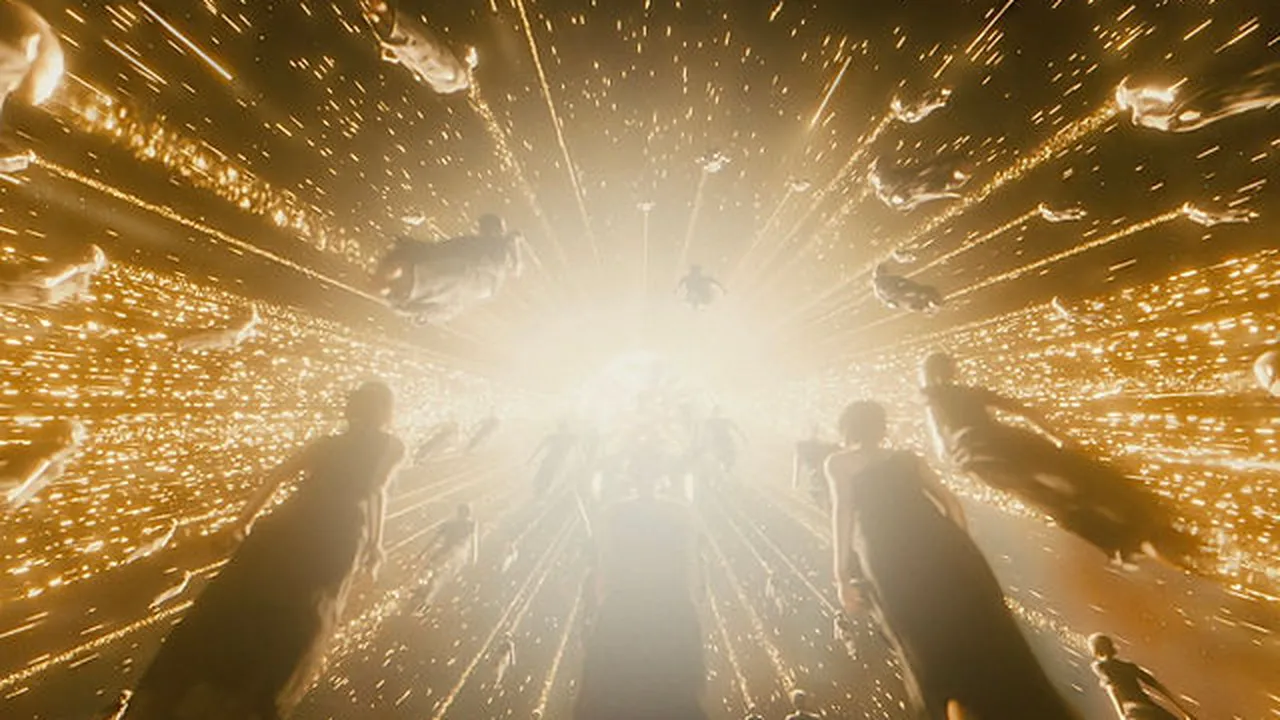
The division of labor will become increasingly clear: a sense of reality can only come from live action. Real people, products, spaces, and on-location texture are the first basis on which viewers judge whether a film is trustworthy, and there is no generated substitute for this part. AI's place is in extension — background expansion, visual variants, cutting into multiple versions, and efficiency steps. Conversely, using generation to create fictional, exaggerated effects is the part that cheapens a piece fastest: the stronger the spectacle, the more obvious the cheapness, and the brand's perceived quality is dragged down instead. So the key to hybrid production is not "what percentage is AI," but "whether the real parts are protected by live action." When requesting a quote, require the production side to state which steps are live action and which are generated, rather than only asking "do you use AI or not."
Layer 2: Different Brand Types Are Not Buying the Same Product
Large brands / campaign-scale projects: what they buy is creative, execution scale, and completeness of rights. Budgets fall in the high-end band above (from ¥3,600,000, with no ceiling), and licenses for portrait and music — media, term, territory — are often priced separately. At this layer, the way to compare is by proposal and team, not by unit price.
Small and mid-sized brands / single stores and growth-stage companies: what they buy is a product with clear specifications and a controllable total price. In the Japanese market, full promotional films for small and mid-sized brands are most often discussed in the range of several hundred thousand yen. What this layer fears most is not expensiveness, but opaque quoting and items added midway. The suitable form is a fixed-specification package: duration, number of shots, number of revisions, and delivery schedule all fixed in writing.
E-commerce / mass-produced content: what they buy is unit cost and production capacity. Priced per piece, per minute, or by monthly output volume, with the highest share of templating and AI production. In public discussion on the mainland, mass-production prices for AI short videos have already fallen to the range of a few hundred RMB — but those are pure-generation or light-labor assembly-line products, not the same tier as specification-based production that includes planning and quality control. What e-commerce clients really need to confirm is: the bulk unit price, the delivery rhythm, and who safeguards brand consistency.
Layer 3: Different Service Combinations Mean Different Unit-Price Logic
Beyond one-off projects, more and more brands are placing production inside an ongoing content marketing combination: insight and planning first, then continuous content output, adjusted through data review. An ongoing structure changes unit prices — using Shootsta's public pricing as an example, the same type of corporate video runs approximately ¥850,000 to ¥2,600,000 per piece under project pricing, and approximately ¥380,000 to ¥1,150,000 per piece under subscription pricing, because the investment in brand templates, planning, and project management can be amortized across continuous output.
This is exactly the combination Artbe uses in delivered projects. The process has four steps:
1. Insight: dual-track insight using AI tools and first-line SNS data — AI insight processes competitor content, comments, and market signals; SNS insight comes from account backends and the platform itself. The two are cross-checked to set topics and expression strategy.
2. Planning: insight is converted into content planning and production specifications (what to shoot, by what method, where to publish, what response to expect), and only then does quoting begin.
3. Production: the method is chosen according to the content — live action where a sense of reality is needed, AI visuals and video where scale and variants are needed, or a mix of both; it is never a case of having a tool first and then looking for a use for it. One principle runs throughout: a sense of reality relies on live action, and AI is not used to create fictional, exaggerated effects — that is the part that cheapens a piece fastest.
4. Continuity and review: after content is published, it is reviewed against real signals such as saves, inquiries, and direct messages, and the next round of topics and specifications is adjusted on a rolling basis.
Forms already delivered include: ongoing SNS content operations in the medical beauty field (insight-driven topic selection and production), AI short videos for a pet IP (a paid AI production project), and monthly content packages for restaurant locations (tiered by shooting and update intensity).
The price reference for ongoing services is not generation tools, but local labor: in Japan, a part-time editor's monthly salary is approximately ¥250,000, and SNS outsourcing from Chinese service providers commonly runs ¥300,000 per month (two posts per week). What a monthly package buys is not a number of pieces, but the full ongoing service of insight, planning, shooting, production, and review — this is its fundamental difference from "buying videos by the piece."
How Artbe Quotes
Itemized line items: planning, shooting, post-production, AI production, and rights handling are priced separately, and additions or removals are adjusted on the same itemized sheet — never glossed over with a single total.
Specifications fixed before quoting: duration, aspect ratios, number of versions, number of revisions, and commercial scope are written into the quotation; anything beyond the specifications is confirmed separately, and no vague fees are added after the fact.
Two pricing methods kept separate: one-off production projects are quoted item by item per project; ongoing content marketing services are priced as monthly packages or by individual item. Brand films do not carry a single listed total price, because the five factors in the first section differ too widely; but the quotation lists every item, so it can be matched line by line against any other company's.
Short videos and AI production: priced per piece or by specification, with no listed unit price — specifications (duration, number of shots, generation rounds, revision scope, commercial scope) differ, so prices differ completely; everything is itemized at quoting time.
Travel-shoot products: quoted per day, or as a per-project package.
No surcharge for Chinese-language communication: Chinese can be used as the project's communication language, and no extra fee is charged for the communication language itself; planning, shooting, and post-production are managed by our own core team, and work is never subcontracted wholesale.
Five Things to Confirm When You Receive a Quotation
1. Whether the number of shooting days and on-site hours are stated, and how extra days and overtime are calculated.
2. Whether delivery specifications and quantities are itemized: duration, aspect ratios, number of versions, extension assets, and whether raw footage is delivered.
3. Whether the rights scope is stated: the media, term, territory, and secondary use of on-camera performers' portrait rights; the commercial ownership and compliance terms for AI-generated material.
4. The number of revisions, the revision scope, and how overages are charged; for AI production, ask how many rounds of generation and selection the quote includes.
5. For ongoing services, confirm the monthly delivery list: number of pieces produced, number of shoots, the form of review, ownership of materials, and how content is handled after the contract ends.
Do not sign a quotation that leaves these five things unclear, however cheap it is — most production disputes arise here, not in the total price.
Q&A
Q. Why can quotes for the same brand film differ by several times?
A. Look first at the production method (live action, AI, hybrid), then at the brand type and specifications, and finally at whether ongoing services are included. Even when the finished duration is the same, the scope of production can be completely different. When comparing quotes, first align the delivery goals and specifications, then match the fees item by item.
Q. AI can make a piece for just a few dozen yuan — why are you more expensive?
A. A few dozen yuan is the price of "generating once." What commercial delivery must account for is the price of a finished piece: discard selection (discard rates are commonly around 70–80%), consistency correction, brand quality control, rights clearance, and delivery responsibility are all included. Artbe's AI production is priced by specification, and the quote states how many rounds of generation and revision are included and what specifications will be delivered — you can compare against any low-priced generation service on this basis.
Q. How does quoting differ for large brands, small and mid-sized brands, and e-commerce?
A. Large brands are on project pricing, with creative, execution, and rights priced separately. Small and mid-sized brands suit fixed product packages with specifications locked in and the total price set upfront. E-commerce is priced per piece or by monthly output, with the focus on bulk unit price, delivery rhythm, and safeguarding brand consistency. The three are not discount tiers of the same rate card.
Q. Can we hire you only for shooting, and do the editing ourselves?
A. Work can be commissioned split by process step: planning, shooting, post-production, and AI production can each be priced separately, and the quotation states whether what is delivered is footage or a finished piece, and where the boundary of responsibility lies.
Q. Can a monthly package and a one-off project be combined?
A. Yes — this is precisely the common form of ongoing content marketing services: first complete brand-level content (such as a main visual film) as a one-off project, then produce SNS content continuously under a monthly package. The investment in insight and planning is amortized over the ongoing period, and the cost per piece of content is easier to keep lower than buying piece by piece.
Q. Will communicating in Chinese make it more expensive, or get the work subcontracted?
A. No. Chinese is one of Artbe's project communication languages and carries no extra charge; planning, shooting, and post-production are handled by our own core team. When a project's scale requires it, collaborators are added under our production management, but work is never subcontracted wholesale.
Q. Why does shooting in Japan cost more than shooting in China?
A. You cannot compare by country alone; look at team configuration, shooting conditions, locations, performers, production specifications, and rights scope. Japan's differences lie mainly in the yen-denominated cost of local labor and locations, and in the degree to which rights handling must be put in writing. The cost difference in cross-market projects comes from execution conditions and production scope, not from any single language or geographic factor.
About Artbe
Artbe LLC is a content marketing support company based in Shibuya, Tokyo, represented by Chunrong Chi. Building on our advertising creative and production capabilities, we provide film, visual, AI production, spatial visual (VMD), and ongoing SNS content marketing services for Chinese brands entering the Japanese market and for Japanese local brands, handling everything from insight, planning, and production through to post-publication review in one integrated flow. For inquiries, please use the contact form on our official website; for inquiries in Chinese, we also accept WeChat: artbestudio. We usually reply within two business days.